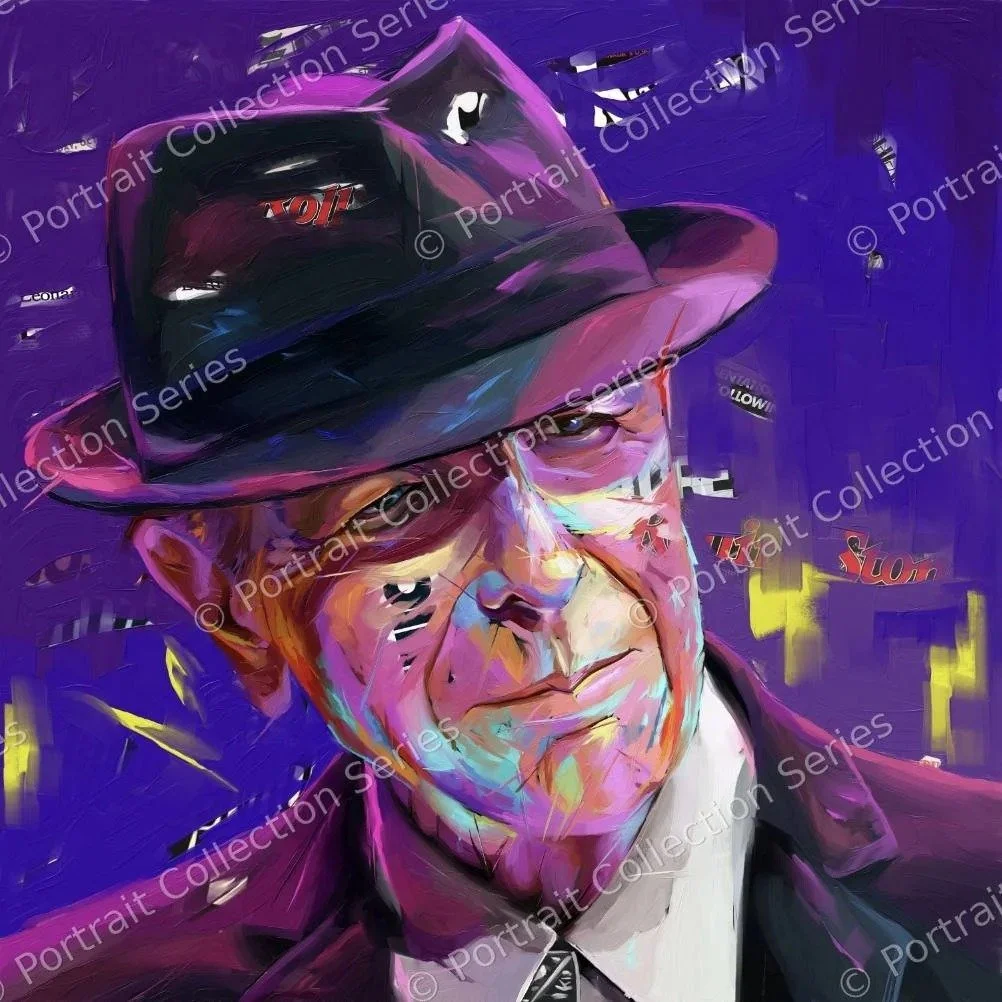
"Some songs arrive in a flash. Others take years. 🕊️ On September 21, 1934, a future poet and songwriter named Leonard Cohen was born here in Montréal. Decades later, he would write "Hallelujah," a song that was first turned down, slowly discovered, and finally embraced by the entire world. On his birthday, join us as we follow the long, winding road of one of the most beloved songs of our time. 🎶🎩 #LeonardCohen #Hallelujah #Montreal #SongMeanings #ArtistryInSoul #PortraitCollectionSeries"
A Montréal Poet
Leonard Cohen was born in Westmount and grew up in Montréal. He studied at McGill University, where he won a literary competition for his poems, and graduated in 1955. His first book of poetry, Let Us Compare Mythologies, was published in 1956. Long before he was a singer, Cohen was a poet, and you can feel it in every line he ever sang.
Eighty Verses, or More?
"Hallelujah" first appeared on Cohen's 1984 album, Various Positions. Writing it was a long labor of love. Cohen is reputed to have written somewhere between 80 and 180 draft verses, and he himself spoke of 150. His notebooks, full of revisions and additions, back up the story, though only a handful of those verses were ever officially released.
The filmmakers behind the 2022 documentary Hallelujah: Leonard Cohen, A Journey, A Song, Dan Geller and Dayna Goldfine, said that Cohen took about five years to write the song, and kept reshaping it for his performances. Over the years, his live versions often used quite different lyrics from the original recording.
Did you know?
The album that introduced "Hallelujah" was rejected by Columbia Records, Cohen's label, and the song received little attention at first. It didn't even reach the Billboard charts until after Cohen's death in 2016. 📀
The Song That Kept Being Reborn
The road to fame came through other voices. In 1991, John Cale recorded a new version of "Hallelujah." Cale's version inspired a 1994 recording by Jeff Buckley, whose tender, sorrowful interpretation became legendary in its own right. Then, in 2001, Cale's version was featured in the animated film Shrek, introducing the song to a whole new generation.
From there, "Hallelujah" was everywhere: in films, on television and in singing competitions. By 2008, more than 300 versions of the song were known. The story was even told in a book, The Holy or the Broken (2012), by music journalist Alan Light.
Still, there's something special about hearing the song from the man who wrote it. In his 2008 concert in London, Cohen sings it with the quiet authority of someone who spent years finding every word.
Montréal Remembers
Leonard Cohen passed away on November 7, 2016, but in his hometown, he's impossible to miss. In 2017, two murals were created in his honor. Artist Kevin Ledo painted a nine-storey portrait on Saint-Laurent Boulevard in the Plateau, near where Cohen lived. Downtown, El Mac and Montréal artist Gene Pendon created Tower of Songs, a giant mural on Crescent Street that watches over the city. 🏙️
For us, painting Cohen meant capturing that same feeling: a gentle gaze under a familiar hat, and a poet who seems to be listening as much as he's singing.
Final Thoughts
"Hallelujah" teaches us something beautiful about art: a masterpiece doesn't always arrive with fanfare. Sometimes it waits patiently, verse after verse, until the world is ready to sing along.
Which version of "Hallelujah" moves you the most: Cohen's, Buckley's, or another one entirely? Share your thoughts with us in the comments below! 🕊️
Discover "The Poet's Gaze" and the rest of our Legends Portrait Collection.